
Bring up walking wilds and most people imagine a video slot. But the roulette wheel features its own take of walking wilds—a unpredictable trip that begins the moment the croupier launches the iconic ivory ball spinning against the track. In European Roulette live baccarat online GB, each spin is a renewed expedition across a numbered landscape of 37 pockets. The ball might land softly, rebound erratically, or hop across pockets in a way that feels almost alive, as if it holds a mind of its own. Let us examine that erratic motion and the deeper mechanics that turn the single-zero wheel a enduring favourite among UK players. This isn’t about a slot feature transplanted onto a table game; it’s about grasping the genuine randomness, the nuanced design choices, and the strategic layers that convert a simple spin into a refined gambling experience. By taking a fresh look at the wheel, you will understand why European Roulette stays one of the most elegant and numerically transparent games on any casino floor.
External Wagers and Tactical Spread
External wagers occupy the perimeter of the layout and offer a quite distinct tempo of play. The even-money chances (red/black, odd/even, low/high) each include 18 numbers and return 1 to 1. The probability of winning on any single spin is 48.65%, and the inclusion of the single zero is what prevents that value from reaching an even 50%. Dozens and column wagers each encompass 12 numbers and pay 2 to 1, with a win probability of 32.43%. These perimeter bets make up the core of many organized wagering strategies because they provide frequent small wins that can maintain a playing budget through lengthy sessions. If you prefer a more controlled, relaxed gameplay, https://www.flashscore.com/h2h/american-football/memphis-showboats-rLaoQrDR/houston-gamblers-jqfxypZK/ outside bets tame that walking wilds volatility and transform the game into a stable push-and-pull between you and the house.
One of the most https://bleacherreport.com/articles/10097308-ufc-payouts-for-champion-fighters-from-2011-2016-revealed-in-new-lawsuit-documents underrated aspects of outside bets is how they work with table limits. A standard online European Roulette table might have a minimum outside bet of £1 and a maximum of £500, while inside bets often have a lower max per number but a higher aggregate cap. That arrangement allows you utilize outside bets as a starting point and then sprinkle inside wagers for extra entertainment, all without breaching the table maximum. You can also build spread plans, like combining a column bet with a colour bet to encompass a big section of the wheel while having just a few numbers open. Always verify the specific limits of your table. They govern how far you can extend a progression or how many simultaneous bets you can make. Understanding the limits ahead of time is a simple yet strong way to maintain your session under control.
Inside Bets and Their Prize Multipliers
Internal wagers are the wagers set right on the numbered grid, and they form the thrilling heart of European Roulette. The straightforward is the straight-up bet: you place a chip squarely on a single digit, zero included. If the ball settles in that pocket, the payout is 35 to 1, signifying a £1 stake brings back £36 counting the starting stake. The win chance is a slim 2.70%, which accounts for both the generous multiplier and the stomach-churning volatility. For many players, the thrill of striking a straight-up number is the clearest manifestation of that roaming wilds vibe. It’s as if the ball has roamed through the entire wheel before finally dropping into your number. Straight-up bets also create the basis for more intricate wagers that include adjacent numbers on the wheel itself, a ingenious technique often used in call bets.
Stepping past the single number, you encounter split bets spanning two adjacent numbers on the layout. Put a chip on the line between any two numbers, such as 5 and 8 or 17 and 20, and you get a 17 to 1 payout with a 5.41% win probability. A street bet includes an entire row of three numbers, pays 11 to 1, and has an 8.11% chance of success. Corner bets stretch across four numbers that meet at a single intersection, providing an 8 to 1 payout and a 10.81% probability. The six-line bet, sometimes called a double street, spans six numbers across two adjacent rows, pays 5 to 1, and offers you a 16.22% chance of winning. All these inside bets hold that same 2.70% house edge, but as you cover more numbers, volatility drops step by step. That gives you a risk spectrum you can adapt to match your session goals.
Straight‑Up and Split Bets in Practice
Determining Expected Value on a Single Spin
When you place a £1 straight-up bet, the anticipated value per spin is the sum of the possible outcomes weighted by their probabilities. You forfeit £1 on 36 numbers and collect £35 on one number, yielding an expected loss of roughly 2.70 pence per spin. For a split bet, the calculation uses the same logic: you forfeit £1 on 35 numbers and gain £17 on two numbers, again generating an expected loss of about 2.70 pence. That consistency across all inside bets is what makes European Roulette so mathematically elegant. No matter how you combine straight-up, split, street, corner, or six-line wagers, the house edge stays at 2.70%, as long as the zero is regarded like any other number. Recognizing this flat structure helps you sidestep the trap of believing some inside bets are better value. Over the long term, they’re all similarly fair in terms of expected value.
The Architecture of the European Wheel
The one-zero wheel is a work of art of harmony and illusion. It holds 37 pockets, labeled 0 to 36, with the single zero in green and the remaining alternating red and black. At first sight, the sequence appears haphazard, but it follows a carefully engineered arrangement designed to spread high and low numbers, odd and even, and red and black as uniformly as possible around the wheel. The single zero sits between 26 black and 32 red, and from there the numbers march in a pattern that has remained almost unchanged since the pastime left the casinos of Bad Homburg and Monte Carlo. You’ll find 15 black opposite 19 red, 4 black opposite 21 red, and so on, creating a layout where no sector of the wheel gives a clear bias toward any simple bet. This design accuracy is why European Roulette is a game of pure probability, rather than a contest of physical prediction, at least under fair conditions.
What frequently goes unnoticed is how the wheel’s physical construction works with the ball’s movement. The frets (the shallow dividers between pockets) are shorter than on many American wheels, so the ball can skip more noticeably before landing. The track itself is slightly hollowed, and the ball’s composition, typically ivorine or Teflon, influences the bounce in minor ways. All of this contributes to the feeling of walking wilds we noted earlier: the ball seems to drift from pocket to pocket with a mind of its own. In a well-maintained wheel, no two spins are ever identical, and the chaotic micro-movements make sure that even experienced players cannot reliably forecast the outcome. For us, this physical unpredictability is the essence of the game’s appeal, because it assures that every session starts from a position of genuine doubt, where the only instruments we have are probability and bankroll discipline.
The betting felt mirrors the same architectural thinking. The layout arranges numbers into inside and outside betting zones, with the zero holding its own space at the top of the grid. The arrangement allows you set chips on individual numbers, splits, streets, corners, six-lines, and the full range of outside bets without ambiguity. That symmetry between wheel and felt is by design; it is the result of more than two centuries of refinement. When you settle in at a European Roulette table, whether in a land-based casino or a live-streamed online environment, you’re interacting with a system where every element has been perfected for speed, clarity, and mathematical integrity. Grasping this layout enables you transcend superstition and into a more informed, confident style of play.
Grasping the House Edge and RTP
The crucial number in European Roulette isn’t on the wheel at all; it’s the 2.70% house edge that derives straight from the single zero. Because there are 37 pockets and a straight-up bet pays 35 to 1, the theoretical return to player is 97.30% over the long run. This is not a theoretical abstraction; it indicates that for every £100 you wager, the game is intended to return £97.30, with the casino retaining £2.70 as its mathematical advantage. We highlight the phrase “over the long run” because in any single session the real result can vary greatly in either direction. The RTP figure is a statistical expectation over time, not a guarantee, and it holds true for all bets on the layout equally, with one crucial exception that we’ll examine in detail when we cover La Partage and En Prison.
Unlike RTP, volatility in European Roulette varies dramatically depending on the kind of bet you make. A straight-up wager on a single number carries enormous volatility because the probability of winning is just 2.70%, yet the payout multiplier is 35x. By contrast, an even-money bet on red or black has a probability of 48.65% and pays only 1 to 1, producing far lower volatility. View volatility as a gauge of how far and how fast your bankroll is likely to fluctuate during a session. If you appreciate the walking wilds rush of rapid swings, you’ll probably lean toward inside bets. If you favor a steadier rhythm, outside bets are more your speed. Getting a solid handle on how RTP and volatility work together is key to controlling expectations and picking a strategy that truly fits your risk tolerance.
One common misconception is that you can defeat the house edge by changing your bet after a loss, a fallacy that ignores the independence of each spin. The wheel has no memory, and the probability of any given number appearing remains exactly 1 in 37 on every spin, no matter what came before. That’s where the walking wilds metaphor becomes uniquely apt: the ball’s path is a random walk with no destination, and no amount of pattern-spotting can change the underlying math. I’d advise viewing that 2.70% edge as the price of entertainment, much like buying a ticket to a show. Once you accept that the game is designed to prefer the house in the long term, you can zero in on the short-term thrills and the strategic choices that make each spin thrilling.
Wagering Limits and Game Dynamics
Every European Roulette table operates within a specific bet range, and that range influences the entire playing experience. The minimum bet is the lowest amount you can wager on a single outside chance, or the combined inside bets must meet the table’s inside minimum (which is often less than the outside minimum when spread across multiple positions). The maximum bet caps the total amount you can wager on any one outside proposition, and it also caps the stake per inside number. These boundaries are not random; they safeguard the house from a catastrophic loss while also offering you a framework within which to handle your bankroll. A table with a £0.50 minimum and a £250 maximum matches a very different style of play than one with a £5 minimum and a £5,000 maximum, and you should choose a table that aligns with your session budget and your personal appetite for risk.
Table dynamics also include the pace of play, especially in live-dealer online environments where the croupier controls the rhythm. A fast table can generate over 60 spins an hour, which accelerates the long-term effect of the house edge and can drain a modest bankroll more quickly than you might think. Slower tables, or those that enable you to take your time placing bets in a digital interface, offer you more room to consider and adjust your strategy between spins. I’ve found that focusing on the tempo is just as important as being aware of the bet limits, because the speed of the game directly influences how many decisions you take in a given period. By aligning the table’s pace and limits to your personal comfort zone, you can keep the walking wilds sensation stimulating rather than overwhelming.
How to Handle a Session with Assurance
Beginning a European Roulette session needs nothing more than selecting a reputable table, setting a solid budget, and understanding the fundamental mechanics of putting down chips. On a online interface, you click the chip denomination you want, then click the desired spot on the felt; the software instantly acknowledges the bet and displays your total stake. In a live-dealer setting, the principle is the same, but you must operate within the betting window called by the croupier. Once betting ends, the dealer releases the ball and declares “no more bets.” The spin itself is pure walking wilds: the ball goes around the track, falls onto the rotor, and bounces among the frets until it finally comes to rest. The winning number is revealed, losing bets are gathered, and winning bets are settled according to the established multipliers we covered earlier.
We consider the best strategy is to choose in advance what sort of experience you’re after. If you’re chasing the thrill of a big multiplier, you might assign a part of your bankroll to straight-up and split bets, holding the rest in reserve. If you opt for a longer, steadier session, focus on outside bets and perhaps take advantage of La Partage tables when available. There’s no universally proper approach, but there are paths that align with your goals and your capacity for variance. I’d also recommend maintaining a simple log of outcomes, not to forecast future spins but to stay conscious of how your bankroll is trending relative to the expected loss over the session. That habit turns an emotional pastime into a more structured activity without stripping away the fun.
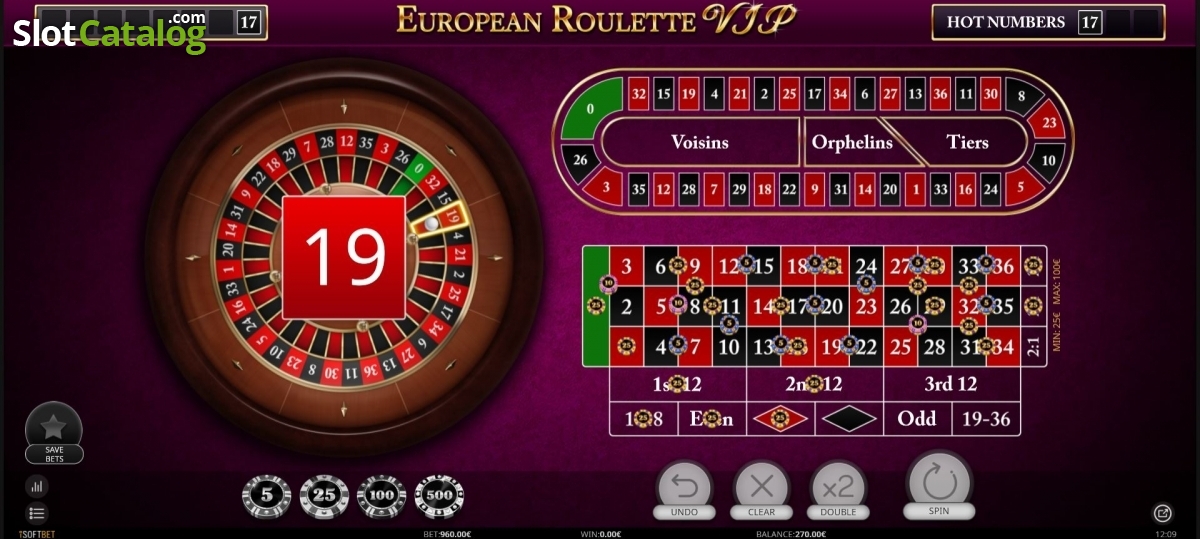
One useful step that’s frequently missed is confirming the specific table rules before you put down your opening chip. Verify whether La Partage or En Prison is used, confirm the smallest and highest stakes for interior and outside bets, and observe any side-bet choices like neighbour bets or racetrack wagers that could be available. The racetrack, a dedicated oval-shaped betting area, enables you put call bets targeting specific wheel sectors, like Voisins du Zéro or Tiers du Cylindre. These bets use a combination of straight-up, split, and corner wagers to encompass fixed number groups, and they add a level of complexity for players who wish to engage more deeply with the wheel’s geography. Spend a few moments learning the complete variety of options, and you prepare yourself up for a session that’s both educated and genuinely entertaining, without leaning on myths or hunches of any kind.
The function of La Partage and En Prison regulations
At times European Roulette provides a set of player-friendly rules that modify the math on even-money bets, and they merit special attention. La Partage translates to “the sharing.” It activates when the ball falls into the zero pocket. Instead of forfeiting your whole even-money bet, you get half your stake back. That one tweak cuts the house edge on red/black, odd/even, and low/high bets from 2.70% down to 1.35%, effectively increasing twofold the RTP on those bets to 98.65%. En Prison moves a step further: when zero hits, your even-money bet is kept “in prison” for the next spin. Hit the next spin, and you receive your original stake back without any additional payout; lose, and the stake is forfeited. En Prison also drops the house edge to 1.35%, but it adds an extra layer of suspense that a lot of players love.
These rules are not found on every European Roulette table, and they’re almost exclusively applied to even-money bets only. In the UK, La Partage appears most often in high-stakes rooms and on certain premium online tables, while En Prison is a more uncommon treat usually linked to French Roulette variants. When you find a table with either rule, strongly think about centering your play on even-money chances. The better odds give you a genuine mathematical advantage over standard tables. Check the game rules or help section before you commit chips. La Partage or En Prison can change an ordinary session into a much better deal. Even a half-percent drop in the house edge accumulates over hundreds of spins, creating a noticeable dent in your long-term results over time.